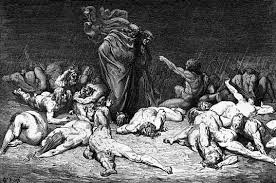
The third circle of Hell is dedicated to the sin of gluttony, where souls are punished for their excessive overindulgence in food, drink, and luxury during their lives. They lie prostrate in a vile, filthy mire created by an eternal, cold, and heavy rain, hail, and black snow, symbolizing the "disgusting overabundance" they sought on earth.
The gluttonous are guarded by the three-headed monster Cerberus, a fitting symbol of gluttony himself who acts as a ravenous hound that claws, tears, and shreds the spirits, forcing them to endure the same degradation they once caused. The souls are described as making a "terrible smell" in the slush, and the environment is one of filth, decay, and utter discomfort.
A notable encounter in this circle is with the spirit known as Ciacco (meaning "pig" or "hog"), a Florentine who shares a dark prophecy about the political strife between the White and Black Guelphs in Florence. The punishment perfectly illustrates contrapasso, as those who lived for selfish indulgence in life are now forced to exist in a cold, disgusting, and neglected state, effectively treated like trash in an environment of eternal decay.
Cerberus
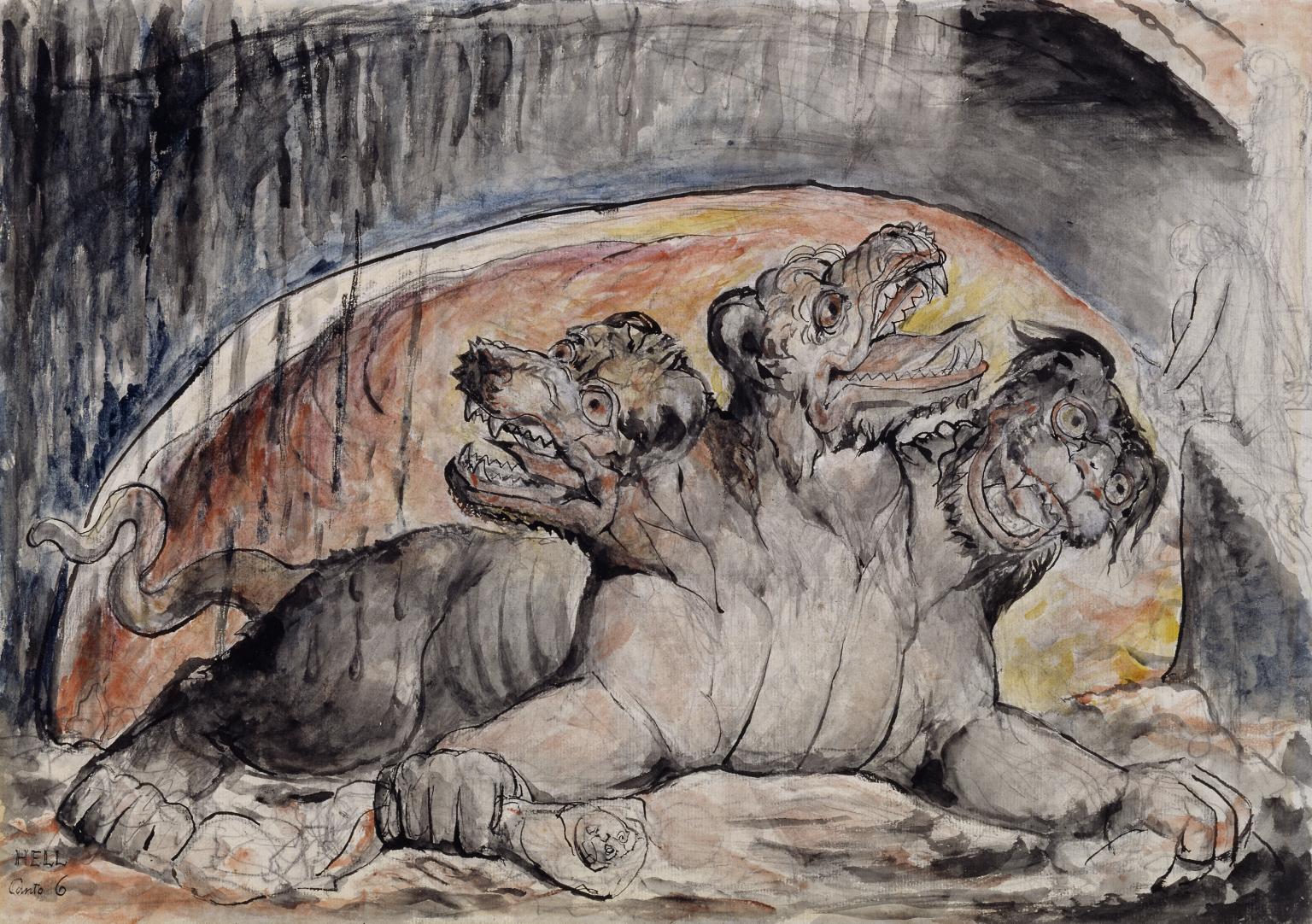
In Canto VI of Dante’s Inferno, Cerberus acts as the monstrous guardian of the Third Circle of Hell, where the souls of the gluttonous are punished. Drawing from classical mythology, Dante reimagines this three-headed hound as a "great worm" (gran vermo) who embodies the very sin he watches over: insatiable greed and filthy indulgence. He is described as having red eyes, a greasy black beard, a vast belly, and claws for hands, which he uses to flay, flay, and quarter the souls of the damned who wallow in a disgusting, putrid slush produced by a never-ending freezing rain.
Cerberus’s role is to torment the gluttons, mirroring their earthly behavior by ripping them apart just as they ruined themselves through excessive consumption. The atmosphere of the Third Circle is one of vile sensory overload, with the sinners howling like dogs while being assaulted by the beast. Dante’s portrayal highlights that gluttony is a bestial sin that strips away human dignity, leaving the souls to be treated as waste by a creature who is all appetite.
When Dante and Virgil approach, Cerberus attacks, but Virgil subdues him in a manner similar to Aeneas's journey in the Aeneid. Instead of honey cakes, however, Virgil throws heavy, filthy handfuls of mud into the beast's three gaping mouths. This action quiets Cerberus, highlighting the contrapasso of his punishment—a glutton who can only be appeased by the putrid waste of the circle he guards.